
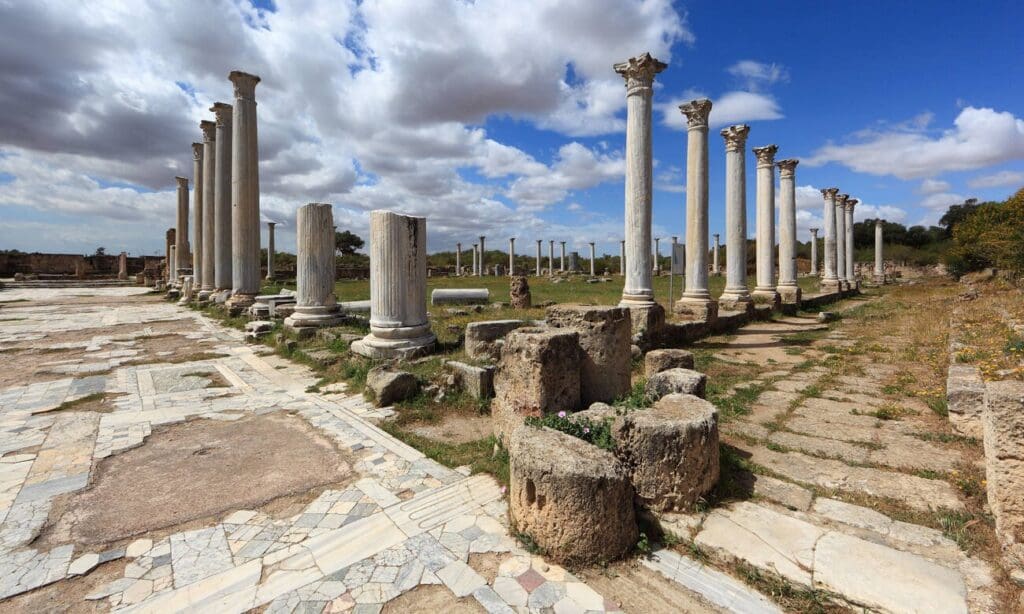
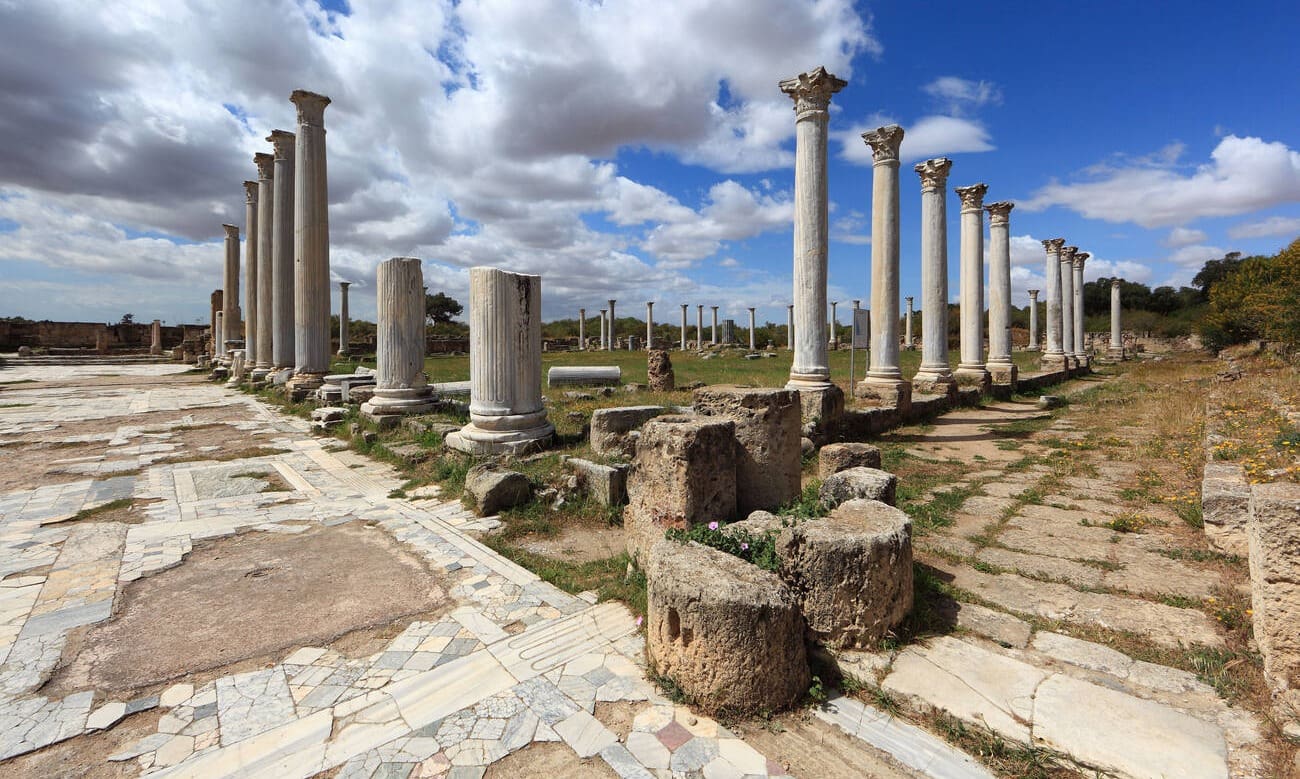
The gymnasium at Salamis, Cyprus, had to be rebuilt after Cypriot Jews rose against Rome in what is called the Diaspora Revolt (AD 115–117). Photo by Bildagentur-Online/Sunny Celeste / Alamy.
Only two generations after the traumatizing Roman destruction of Jerusalem (AD 70), Cypriot Jews clashed with their Roman overlords in a bloody uprising. Their fight was part of a widespread Jewish rebellion against Rome that engulfed much of the eastern Mediterranean. Because it took place outside the Roman province of Judea, this Second Jewish-Roman War is also known as the Diaspora Revolt. In a series of violent confrontations between AD 115 and 117, thousands of diaspora Jews died. Yet literary and archaeological sources for the revolt are scarce. Writing for the Spring 2026 issue of Biblical Archaeology Review, the late Thomas Davis probes a new model of the Diaspora Revolt.
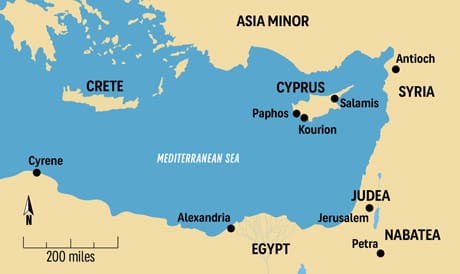
Map of the eastern Mediterranean. BAS.
Cypriot Jews traced their origins to at least the fourth century BC, when the Mediterranean island already hosted a sizable community of Jewish immigrants. Located in relative proximity of their ancestral home, Cyprus soon became a commercial hub for Judean merchants. For the first century AD, Judean coins even make up almost one-third of all coins found at Cyprus. The New Testament book of Acts testifies to Cyprus being a region with vibrant Jewish communities, when it recounts how Paul, Mark, and Barnabas (a native Cypriot from Salamis) visited the island’s many synagogues to preach the gospel (Acts 13), while Acts 11 highlights the role of Cypriot Jewish Christians in expanding the Christian mission in Syrian Antioch.

Thomas Davis, who was Associate Director of the Lanier Center for Archaeology, directed the center’s excavations at Kourion, a large city on the southwestern coast of Cyprus. In his article titled “The Diaspora Revolt: Cyprus’s Forgotten Jewish Uprising,” Davis considers the early spread of Christianity together with recent archaeological discoveries that may shed light on this consequential yet obscure historical event. “We also excavated part of what may be an elite residence that was extensively rebuilt in the early second century,” describes Davis, discussing one of the tell tales for the Diaspora Revolt at Cyprus. “Our project architects observed that much of the architectural fabric of the building consisted of spolia (reused building stones), probably from the nearby temple of Apollo, located less than 2 miles outside the city […] Suggestively, the Apollo temple was significantly rebuilt at the end of Trajan’s reign and in the early years of Hadrian. As some have suggested, this rebuild may have been by necessity rather than choice if the temple suffered major damage during the revolt.”
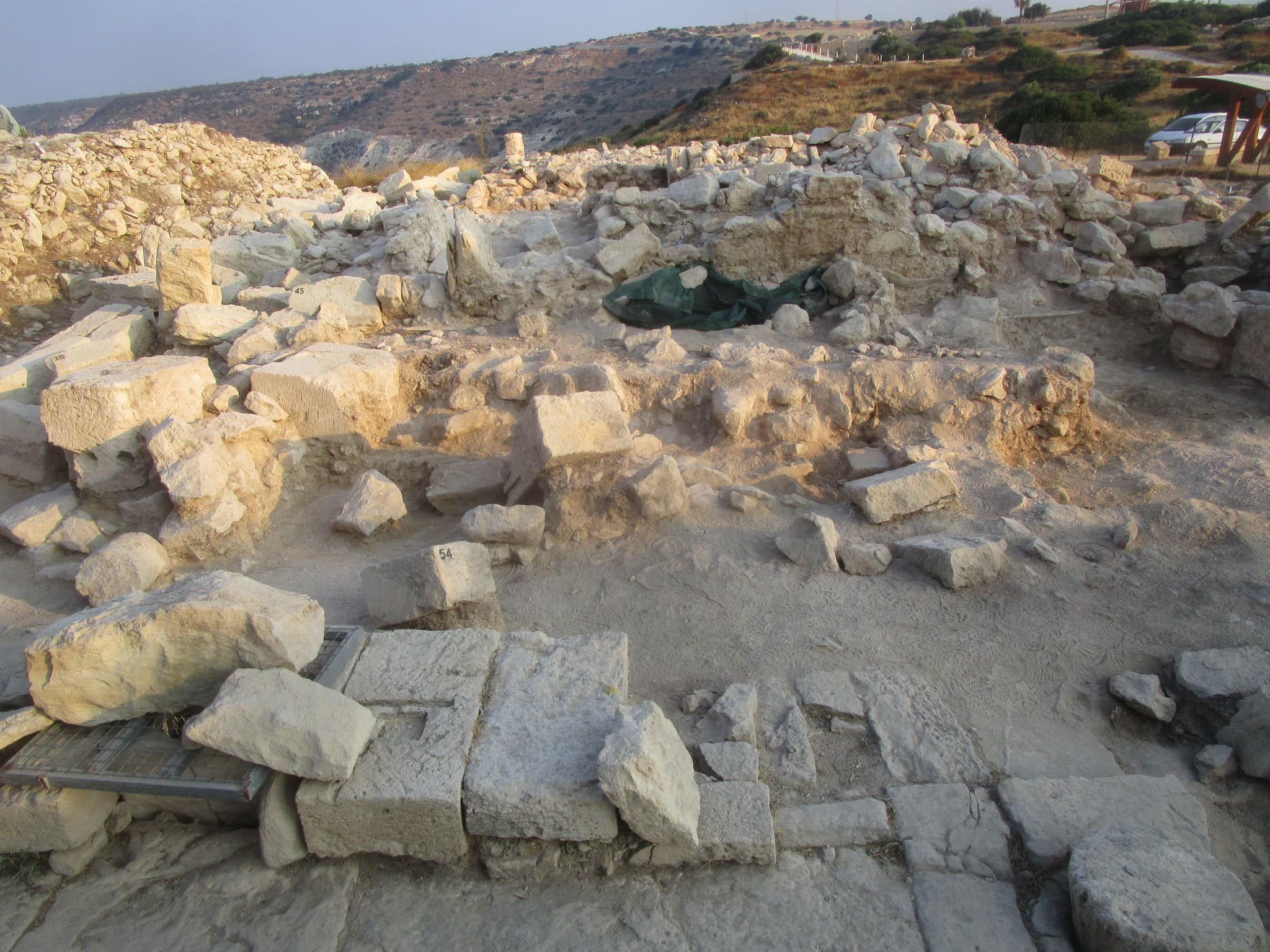
This elite residence at Kourion repurposed fine blocks from Roman monumental buildings that Cypriot Jews likely destroyed in the Diaspora Revolt. Kourion Urban Space Project, courtesy Thomas Davis.
More than 240,000 Cypriot Jews died during the Diaspora Revolt, and archaeology of post-revolt Cyprus paints the new socio-economic picture. One of the iconic Cypriot exports to the southern Levant around the turn of the era was the so-called Cypriot Sigillata A—a luxury fine ware with a characteristic red slip. Produced on Cyprus, it was almost exclusively exported to Judea and the neighboring Nabataean kingdom, where King Herod the Great (72–4 BC) had close ties. To explain the popularity of this pottery type, archaeologists assume its producers or merchants were Jewish. Tellingly, finds of Cypriot Sigillata A on Cyprus dwindled after the First Jewish Revolt (AD 66–74) and then tanked in the mid-second century, following the Diaspora Revolt. This remarkable decline in production is a sign of social and economic change and likely indirect evidence for the destruction or displacement of Cypriot Jews.
Become a BAS All-Access Member Now!
Read Biblical Archaeology Review online, explore 50 years of BAR, watch videos, attend talks, and more

Although Jews eventually returned to Cyprus a few centuries later, their communities never rebounded, and Orthodox Christians dominated the religious landscape of the island.
To explore the historical evidence for the Diaspora Revolt—including the New Testament and Roman historians—read Thomas Davis’s article “The Diaspora Revolt: Cyprus’s Forgotten Jewish Uprising,” published in the Spring 2026 issue of Biblical Archaeology Review.
Subscribers: Read the full article “The Diaspora Revolt: Cyprus’s Forgotten Jewish Uprising” by Thomas Davis in the Spring 2026 issue of Biblical Archaeology Review.
Not a BAS Library or All-Access Member yet? Join today.
Related reading in Bible History Daily
Paul’s First Missionary Journey through Perga and Pisidian Antioch
All-Access members, read more in the BAS Library
Not a BAS Library or All-Access Member yet? Join today.
The post When Cypriot Jews Revolted Against Rome appeared first on Biblical Archaeology Society.
Comments
Post a Comment